Posts Tagged ‘piano’
A Brief History of the Piano
 November 1st, 2011
The Piano
The piano is the most popular instrument in existence and continues to be the premiere instrument as we enter its fourth century. It is the most complex mechanical device in any home and is capable of fulfilling the player’s every musical wish. With each development since its invention, the piano has increasingly been able to provide infinite nuance of expression, volume and duration of tone. A complex wooden machine with myriad felt coverings and metal springs is coupled with a structure that sustains an average of 20 tons of string tension. Where did it begin?
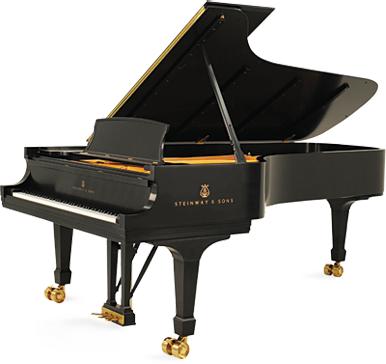
The history of the piano goes back three full centuries when an Italian harpsichord builder named Bartolomeo Cristofori produced a breakthrough technological advance, a new mechanism for the harpsichord which gave it the ability to be played with dynamic variations. He called this touch-sensitive invention “gravicembalo col piano e forte,” or “harpsichord with soft and loud.”
Click the link below to download and listen to a MIDI version of Mozart’s Piano Sonata in C Major, KV 330.
But for centuries before that, there were two keyboards widely in use during a parallel era that began in the 1400s. These were the clavichord and the harpsichord. Each had its own strengths, which made it popular for specific venues and music styles, and it was these, which eventually led to the piano.
Predecessors
Clavichords are constructed with bichord strings that are struck by tangents – usually brass – stuck into the end of each key. As a key is depressed, the tangent strikes the strings and remains in contact with them, acting as a fret. At the same time, the tangent sets the string in motion at its correct speaking length. Uniquely, a rapid varying of pressure on the key causes a vibrato effect. Dynamic expression is also possible on the clavichord, but the range is limited to the mezzo-piano level. Still, clavichords were extremely popular in domestic use and remained so for 300-400 years.

The harpsichord, which dates to 1505, was popular during the same period and had its own followers. Harpsichord strings are plucked by a quill or plectrum. A jack rises as the key is played, carrying the quill toward the string. A felt damper rises off the string, allowing the string to vibrate freely when it is plucked. Volume could be altered mechanically by adjusting the length of the plectrum and its flexibility, either individually on each jack or by re-positioning the complete register (or one row), moving the jack slide laterally. Yet the harpsichord could be played at a higher volume than the clavichord, which made it especially popular in churches, where it could be played along with the organ and still be heard.
A third instrument was also a forerunner to the piano, yet had no keyboard – that is the dulcimer. The dulcimer is a stringed instrument, struck with small padded hammers held in the player’s hands. In 1690, a prolific German dulcimer player and showman named Pantaleon Hebenstreit designed a special dulcimer for himself. His dulcimer was four times the normal size – nine feet long, with an extra soundboard. He made hammers for striking the strings which had two sides with different covering materials, one side for soft and one for loud. This “Pantaleon” (so dubbed by Louis XIV) was a great success for Hebenstreit, but required his unique skills to play. It did not develop commercially, yet provided an important link to the invention of the piano.
Bartolemeo Cristofori
The time was right for the next step – a keyboard that could satisfy composers, who were clamoring for an instrument with a broad dynamic range. The answer came from Bartolomeo Cristofori. He was a harpsichord maker and keeper of musical instruments at the Medici court. In approximately the year 1700, he produced his great invention, the “gravicembalo col piano e forte.” Though evidence points to earlier attempts, Cristofori’s was the first successful keyboard instrument which used hammers to hit the strings. With a 1700 inventory listing Cristofori’s invention found among his employer’s belongings, the 1700 date is known to be close to the date of this invention and it may have come about in 1698-99.
There are three surviving Cristofori pianos: a 1720 which is in the Metropolitan Museum of Art in New York City; a 1722 from the Museo degli Strumenti Musicali in Rome (which was on display at the Smithsonian Institution’s 2000 “Piano 300” showcase exhibit of the history of the piano); and a 1726 Cristofori which is in Leipzig, Germany.


 Posted in
  Tags:
Tags: 